Wireless EEG enables remote monitoring
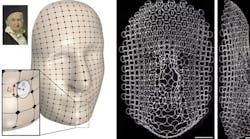
Wireless electroencephalogram systems (EEG) technologies that can enable continuous ambulatory monitoring were presented at MD&M West in Anaheim, CA. Imec, Leuven, Belgium, a nanoelectronics research company, and R&D provider Holst Centre, Eindhoven, The Netherlands, demonstrated a prototype headset that records high-quality EEG signals and wirelessly transmits real-time data to a receiver located 10 m from the system.
Compatible with dry electrodes, the prototype headset features ultra-lowpower electronics and is designed with ease-of-use in mind. Medical applications suggested for the wireless EEG technologies include an early warning system for epileptic patients and brain-typing systems that could enable people with motor disabilities to communicate. Such devices could offer an increased level of comfort for patients and a cost- and time-efficient alternative to current EEG systems, according to the creators.
Comfort and efficiency are the focus of the prototype’s design. Instead of requiring trained personnel to apply the electrodes with gel (like current EEG recordings performed in lab settings), this device can be set up by the user in the home environment because of its dry electrodes. However, gel injection is still possible for applications that require it. The headset also can be adjusted to fit different sizes of heads. Use of dry electrodes not only enables increased comfort but also provides higher signal quality, according to the developers. Eventually, the technology could be used in innovations that enable on-the-move brain monitoring, they hope.
Other applications that could possibly be adapted for medical uses include e-learning systems that feature adjustable difficulty levels based on an individual’s cognitive load and neuro-feedback devices that monitor drowsiness of drivers in real time or cognitive load of occupational health service providers. Adaptive game or virtual environment systems that employ the technology to react to a person’s cognitive state are another potential application.
Imec’s main contribution to the design is its eightchannel ultra-low-power analog readout applicationspecific integrated circuit (ASIC), which consumes 200 μW, features a high common-mode rejection ratio (CMRR) of 120 dB, and offers low noise performance. The whole EEG system is contained in a unit measuring 25 × 35 × 5mm so that it can be integrated into a headset, helmet, or other accessory. It also offers 1.5 to 4 days of performance on a 100 mAh Li-ion battery, depending on the operation.
Want to use this article? Click here for options!
© 2012 Penton Media Inc.
Acceptable Use Policy blog comments powered by Disqus
Webcasts
- How to Quantifiably Confirm Cure of Light Cure Adhesives
Sponsored by: Henkel - View Webcast Archive
advertisement