Medical Edge E-Newsletter

Microneedles work where patches do not


         Subscribe in NewsGator Online   Subscribe in Bloglines
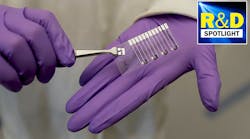
Thumb-sized test patches

Thumb-sized test patches contain 50 stainless-steel microneedles each about 0.025-in. long. These allow replacing a 50 mg tablet with 10 to 12 mg of drug in gel. Microneedles also produced steady bloodstream levels of the drug without the initial peak that occurs with oral delivery.

Researchers at the University of Kentucky and the Georgia Institute of Technology say that pads filled with drugs and fitted on one side with microscopic needles can transdermally and painlessly deliver drugs that normally cannot pass through the skin. The study shows small needles can administer drugs, proteins, and vaccines into the body. The researchers also found that the microneedles delivered therapeutic drug levels with lower doses, and led to fewer side-effects causing metabolites.

“This method may be useful for a broad range of drugs that are normally delivered by hypodermic needle,” says Mark Prausnitz, professor in the Georgia Tech School of Chemical and Biomolecular Engineering. Transdermal administration has advantages over other delivery techniques, but existing systems are used for a narrow range of compounds that easily pass through the skin. Until this study, drug delivery by microneedles involved only animals and human-cadaver skin.


Acceptable Use Policy
blog comments powered by Disqus

Want to use this article? Click here for options!
© 2009 Penton Media Inc.

Back to Top

Browse Back Issues

December 2008

December 2008

November 2008

November 2008

October 2008

October 2008

September 2008

September 2008

July 2008

July 2008

June 2008

June 2008

May 2008

May 2008

Medical Edge Newsletters

View Sample Newsletters


design engineering jobzone promo

Medical Design Careers