battelle.org" />
Medical Silicon Conference Logo

Neural decoding: What’s on your mind?

Breakthrough technology helps patients channel thoughts into actions.

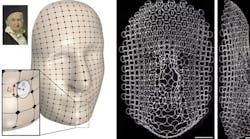
Decoding complex
brain activity from the
motor cortex (top) into
meaningful imagined
movements (bottom).

Decoding complex brain activity from the motor cortex (top) into meaningful imagined movements (bottom).

Unable to move his body or speak, a man slowly blinks his eyes in response to a question. It is his only method of communication, and he can only respond with “yes/no” answers. He cannot initiate questions.

Like many others who have ALS (amyotrophic lateral sclerosis or Lou Gehrig’s disease) and other disabling disorders, the patient suffered from locked-in syndrome, which prevented him from simply expressing his thoughts or communicating with loved ones around him. But new technology called neural decoding is offering hope to patients with locked-in syndrome and various forms of severe paralysis.

In fact, neural decoding could unlock the patient’s ability to communicate with others and take control of the world around them.

This patient was one of the pioneers in the development of neural-decoding technology. The first ALS patient enrolled in a groundbreaking study called BrainGate, he and a female patient volunteered for the study with the ultimate goal of allowing patients to interface with their computers, communicate more effectively and, if possible, control assistive devices such as their own wheelchairs merely by thought.

What is neural decoding?

Neural decoding involves the detection and decryption of tiny signals in the brain to, in essence, read someone’s mind. By placing an electrode array into the brain, the neural activity of individual and groups of neurons can be monitored and recorded. By analyzing the recordings while instructing the patient to imagine various thoughts, mathematical relationships can be found between the instructed thoughts and the neural activity. From this, neural decoders can be constructed to allow patients of the future to use their thoughts to control computers, robotic arms and even wheelchairs.

The female BrainGate patient, as seen on 60 Minutes two years ago, became the first person to control a wheelchair using an electrode array system by Cyberkinetics Neurotechnology Systems, Inc and neural decoding methods by Battelle. Cyberkinetics came to Battelle for assistance with improving the decoding algorithms to bolster the performance of the patients in the Braingate study.

Previously, unsteady cursor control had been demonstrated, but the patient was unable to stop the cursor and accurately place it onto a target or activate the click action. Within the first few months of this new study, the Battelle methods demonstrated stable and accurate cursor motion, and ultimately were used in the world’s first demonstration of a thought-controlled wheelchair using an electrode array brain implant.

Smiling from ear-to-ear, the patient was able to imagine wrist movements in four different directions, along with squeezing her hand, to control a wheelchair remotely around a room. Like driving a remote control car, it took her a few moments to get used to her new controls, but in a matter of minutes, she was able to drive the wheelchair over to a door and stop right in front of it without crashing.

The patient beamed, along with the team from Battelle and Cyberkinetics watching this historical moment as neural decoding proved itself as more than just an idea or science fiction.

Neural decoding requires the identification of consistent patterns in brain activity amongst signal noise and the general background activity of the brain. A variety of mathematical techniques such as principal components analysis and pattern recognition techniques like support vector machines can be utilized to sort out the useful signals and patterns. The BrainGate data involved neural signals from the primary motor cortex in the brain, specifically from the arm and hand area of this region. The neurons monitored by an implanted electrode array were found to be generally active, rarely ceasing to fire. When a neuron fires, it sends an electrical impulse (or “spike” about 1 millisecond long) along its single output when appropriate inputs have been received. This condition seems to be happening constantly, but when analyzed carefully it can be seen that the amount of firing changes depending on what the patient is thinking.

Information is actually encoded in the neural firing rate or timing, called rate coding or temporal coding respectively. Rate coding is more widely used, as the Battelle team found fluctuations in the firing rates for various imagined movements. This is called neural modulation, and our team collected neural firing patterns from patients for many different arm and hand motions. First, these motions were shown to the patient. Subsequently, the patients were asked to attempt or imagine the same movements. Sometimes the patients were also asked to imagine they are performing the movement against significant resistance (such as if they were moving their arm through sand or a thick oil) in an attempt to elicit increased levels of neural modulation.

From finding cancerous tissue to neural modulation To more quickly decode firing rate information, Battelle adapted methods that were previously developed by Battelle for gamma probe systems in the late ’90s, used for finding cancerous tissue during surgery. This method relies on the fact that neural firing can be assumed to be a non-stationary random process, much like a moving radioactive source. These methods were combined with control system theory to create new and powerful neural decoding architectures. Stable and accurate control was then achieved with the BrainGate patients.

Continue on next page

Want to use this article? Click here for options!
© 2012 Penton Media Inc.


         Subscribe in NewsGator Online   Subscribe in Bloglines

Acceptable Use Policy
blog comments powered by Disqus

Back to Top

Social Media

Blog

Like us on

Follow us on

Browse Back Issues

May 2012

May 2012

April 2012

April 2012

June 2011

March 2012

Jan/Feb 2012

Jan/Feb 2012

December 2011

December 2011

November 2011

November 2011

Medical Edge Newsletters

View Sample Newsletters