Building A Better Hernia Patch
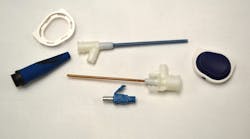
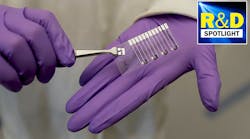
Hernias cause a bulge in the abdominal wall and can worsen with time, even rupture. To update materials used in their repair, healthcare firm Covidien, Mansfield, Mass., (covidien.com) granted the University of Missouri-Columbia School of Medicine a $750,000 grant to make hernia surgeries safer and postoperative recoveries less burdensome. The grant will help establish a materials-characterization laboratory where researchers will study hernia repair materials.
One surgical technique for hernia repair places a mesh over the rupture for a tension-free bridge over weakened abdominal muscles. Other materials and tissues have been tried with mixed results. Most synthetic meshes are made of polypropylene, but it loses mechanical properties as it oxidizes in the body becoming stiff and shrinking.
“Better biocompatible materials would promote tissue in-growth into the abdominal wall while preventing tissue in-growth where it's not wanted,” says Sheila Grant, assistant professor of biological engineering at MU and head of the hernia lab. “We are developing a biocomposite material that should satisfy some implant criteria.”
Acceptable Use Policy blog comments powered by Disqus
Want to use this article? Click here for options!
© 2009 Penton Media Inc.
advertisement
Webcasts
- Antimicrobial Developments in
Silicone Rubber for the Medical Industry
Sponsored by: Wacker Silicones - View Webcast Archive
advertisement